


What do you do when all hope is gone?
This was the teaser question used to probe the minds of the audience in the days leading up to February 28, 2026, when the AY Department of PISDAC presented a musical drama held in the Ivry SDA Church. It was not a question meant to be answered quickly. Rather, it was an invitation—to reflect, to remember, to recognize something of ourselves in a story that has echoed through centuries.
Only as the afternoon unfolded did the audience discover the narrative at the heart of the production: the ancient chronicle of Jacob, his wives Leah and Rachel, and their father Laban. Yet this was no simple retelling of a familiar biblical account. PISDAC’s own dear Sis. Sabrina, penned the script for this drama, poignantly capturing what this turbulent polygamous relationship could have looked like, and the small but compelling cast brought the story vividly to life under Sabrina’s directorial ingenuity.
Bro. Mutale was the ubiquitous narrator, his prose interspersed with Biblical texts from the narrative in Genesis, reminding us that the story was fully based on the Word of God.
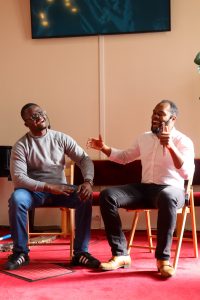
Bro. Nathan portrayed Laban with an intimidating presence, incarnating the shrewd and calculating father who bartered the futures of his daughters for personal advantage. His performance captured both the authority and the cold pragmatism of the character.
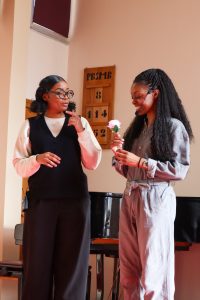
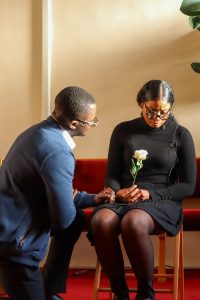
Doubling as both director and actor, Sabrina stepped into the role of Rachel, beautiful, young, idyllic, spoiled and demanding. Her portrayal revealed Rachel’s vulnerability as she grappled with sharing her beloved Jacob with Leah, shattering their sisterly bond. Sabrina gave life to Rachel’s jealousy, poking insults at Leah, and ultimately deciding to push Jacob to mate with her servant Bilhah, no longer able to bear the shame and disappointment of childlessness.
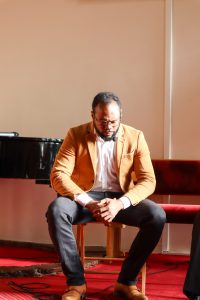
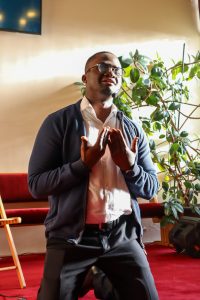
Bro. Harry’s delivery of Jacob traced the patriarch’s emotional arc with remarkable nuance. He conveyed the youthful exuberance of a man who believed he would marry the woman of his dreams. He showed us a working-class man moving his way up the ranks from nothing, developing savvy business acumen and gaining his father-in-law’s trust through hard, diligent and conscientious labor. But the performance also captured Jacob’s turmoil: his fury at Laban’s deception and the ensuing conflicts, where he could not feign loving his wife Leah, being too enamored of the younger more comely Rachel. Indeed, through Harry, we felt Jacob’s outrage at discovering Leah in his bed, his exasperation at being ensnared into a family he never wanted, exacerbated by Rachel’s pleas for children of her own. Then we shivered at his cry of forgiveness to the Lord at the realization of how his callous treatment of Leah had negatively impacted this same family.
And finally, there was Leah, played by Sis. Stephanie, who took us on an emotional and spiritual journey. Through Stephanie’s deeply moving performance, the audience encountered a quiet woman, timidly hiding in the shadow of her more beautiful and outgoing sister. Accustomed to being overlooked, we see her used as a pawn by Laban, the hopes of a blissful marital life fading away as she endured the disdain of both Jacob and Rachel. Indeed, through this love triangle, we fully grasped the meaning from the Word “And when the LORD saw that Leah was hated…” Genesis 29:31. Stephanie took us through Leah’s desperation to gain the love of a man who shunned her through not one, not two, but three pregnancies. We saw her tactics to make herself more appealing to him, but in vain. Finally, we witness Leah’s transformation when she directs her praise to God during her fourth pregnancy. She no longer seeks fulfilment through securing love in a loveless marriage. She names her baby boy “Judah”, who will become the head of the Savior’s genealogical tribe, because, as Leah declares in Genesis 29:35, “Now will I praise the LORD”. Without a doubt, Stephanie truly embodied the role of Leah.
To qualify this event as a mere program would be too banal. The recreation of this Biblical story felt more like a meditation—an unfolding reflection on love, rejection, and the mysterious ways in which faith can grow, even amidst pain. At times, it became difficult to distinguish where the characters ended and the actors began.
Under the direction of Sis. Toni J., a choir composed of singers from PISDAC and fellow SDA churches, provided a rich musical backdrop. Accompanied by a full-blown band with Bro. Lilian as head musician and pianist, the ballads added depth and atmosphere to the unfolding drama. Musicians and singers as young as thirteen years participated! How wonderful it was to see the youth dedicating their talents to the service of their Heavenly Father! An interactive Q&A completed the afternoon, gathering feedback from brethren and confirming that indeed, this depiction of the story was both inspirational and eye-opening.
Special thanks are extended to the PISDAC Church Board, AY, Prayer, Media and Communications departments who proactively played a hand in ensuring the success of this production.
What do you do when all hope is gone?
Through this riveting musical drama, we gleaned the answer unmistakably: sometimes hope is not restored by changing our circumstances, but by fixing our eyes on Jesus, and declaring “Now will I praise the LORD!”.






No responses yet